
Blog / Probate

What Happens When Probate Becomes Contested in Tampa, FL?

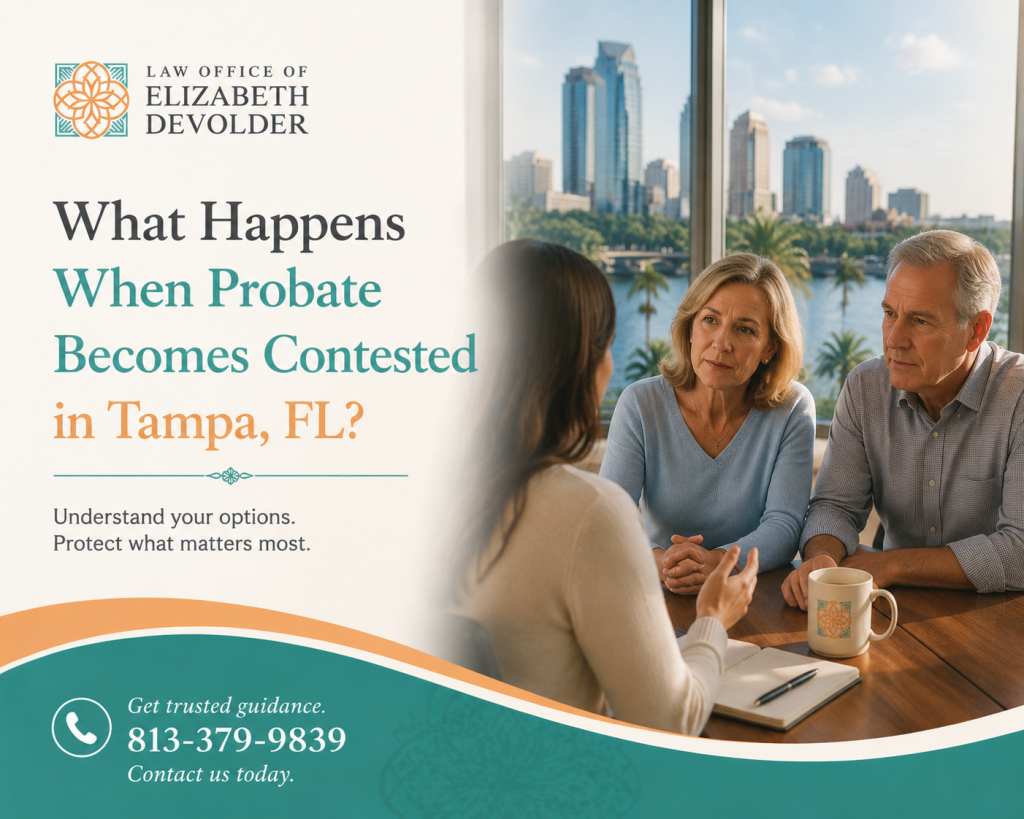
Attorney meeting with clients discussing contested probate matters in Tampa, FL

When a loved one passes away, families hope the estate administration process will move forward without unnecessary complications. Unfortunately, disputes sometimes arise during probate, leading to delays, increased legal expenses, and strained family relationships. Whether a disagreement involves the validity of a will, the actions of a personal representative, or the distribution of assets, contested probate matters require careful legal guidance.

At The Law Office of Elizabeth Devolder, we help individuals and families throughout Tampa, FL, navigate complex probate disputes while also assisting clients with proactive estate planning and probate avoidance strategies designed to minimize the likelihood of future litigation. If you have questions about a contested estate, call 813-379-9839 or contact our office to discuss your situation.

When Can Probate Become Contested?

After someone dies, their estate may need to pass through the Florida probate process if assets were not transferred through other legal means. The court oversees the administration of the estate, validates the will when one exists, appoints a personal representative (formerly known as an executor), and ensures debts are paid before assets are distributed to beneficiaries.

While many estates proceed without conflict, disputes can arise at various stages of the probate process. Interested parties may question the validity of the will, challenge the actions of the personal representative, or raise concerns about how the estate is being managed.

Florida law provides legal procedures for resolving these disputes, and each case depends on its own facts, evidence, and applicable statutes.

Common Reasons Probate Is Contested

Several issues commonly lead to contested probate proceedings in Florida.

Lack of Testamentary Capacity

One of the most common challenges involves allegations that the person creating the will did not have the mental capacity to understand:

  • The nature of creating a will
  • The assets they owned
  • The people who would naturally inherit from their estate
  • The effect of the decisions being made

Medical records, witness testimony, and other evidence may become important when capacity is questioned.

Undue Influence

Another frequent claim is that someone improperly influenced the deceased into changing their estate plan.

Examples may include situations where:

  • A caregiver isolated the individual from family members.
  • Someone pressured the person into changing beneficiaries.
  • A trusted individual manipulated an elderly or vulnerable adult for financial gain.

These cases often require extensive factual investigation.

Fraud or Forgery

A will may also be challenged if there are allegations that:

  • The signature was forged.
  • The document was altered.
  • The deceased was deceived into signing documents they did not understand.

Courts examine evidence carefully before determining whether these claims are valid.

Improper Execution

Florida law establishes legal requirements for creating a valid will. If those legal formalities were not followed, the will could be subject to challenge during probate.

Disputes Involving the Personal Representative

Not every contested probate matter focuses on the will itself. Sometimes the dispute centers on the personal representative responsible for administering the estate.

Interested parties may raise concerns if they believe the personal representative has:

  • Failed to properly manage estate assets
  • Delayed administration without justification
  • Failed to communicate with beneficiaries
  • Mismanaged estate funds
  • Breached fiduciary duties owed to the estate

Depending on the circumstances, Florida courts may review the representative's actions and determine whether further action is necessary.

Who Can Contest Probate in Florida?

Only individuals or entities with a legal interest in the estate generally have standing to challenge a probate matter.

This may include:

  • Beneficiaries named in the will
  • Individuals who would inherit under Florida intestate succession laws
  • Beneficiaries under a prior will
  • Creditors with valid claims against the estate
  • Other parties whose legal rights are directly affected

Simply disagreeing with the terms of a will is generally not enough to support a successful legal challenge. The party contesting the estate must present legally recognized grounds supported by evidence.

How Probate Litigation Can Affect an Estate

When probate becomes contested, the administration process often takes considerably longer than an uncontested estate.

Potential consequences include:

  • Delays in distributing inheritances
  • Additional court proceedings
  • Increased legal costs
  • Family conflict
  • Extended administration of estate assets

Resolving disputes as efficiently as possible often helps preserve estate assets and reduce unnecessary stress for everyone involved.

Can Probate Disputes Be Prevented?

Many estate disputes can be reduced—or avoided altogether—with thoughtful estate planning and effective probate avoidance strategies.

Depending on your goals, planning options may include:

  • Properly drafted wills
  • Revocable living trusts
  • Beneficiary designations
  • Joint ownership arrangements
  • Durable powers of attorney
  • Healthcare directives

While no estate plan can eliminate every potential dispute, comprehensive planning often reduces uncertainty and provides clearer guidance for loved ones.

Work With a Tampa Probate Attorney

Whether you are facing a contested probate matter, have concerns about the administration of an estate, or want to explore probate avoidance options, experienced legal guidance can help you understand your rights and available options.

The Law Office of Elizabeth Devolder assists clients throughout Tampa, Hillsborough County, and the surrounding communities with probate administration, estate planning, and contested estate matters.

If you need trusted legal guidance, call 813-379-9839 or contact The Law Office of Elizabeth Devolder to schedule a consultation and discuss your probate or estate planning concerns.
Posted in:

Related Posts

Estate planning attorney helping Florida family plan a special needs trust for a young beneficiary

How Can You Provide Long-Term Support for Young Beneficiaries in Florida?

Planning for what happens to your assets after you are gone is about more than simply deciding who receives your property. Many parents and grandparents want to make sure their children, grandchildren, or other young beneficiaries receive meaningful support while also having the guidance and protection they need to make responsible financial decisions. Planning for what happens to your assets after you are gone is about more than simply deciding who receives your property. Many parents and grandparents want to make sure their children, grandchildren, or other young beneficiaries receive meaningful support while also having the guidance and protection they need to make responsible financial decisions. At Elizabeth Devolder, we help families throughout Tampa, Sarasota, and Central Florida create personalized estate plans designed around their unique goals. If you have questions about protecting a young beneficiary through a trust or other estate planning tool, call 813-379-9839 or contact us to schedule a consultation. more Why Should You Avoid Leaving Assets Directly to a Young Beneficiary? Many people assume that leaving money directly to a child or young family member is the simplest option. However, a direct inheritance can create challenges that may not align with your wishes. A minor child generally cannot legally manage inherited assets on their own. If a child receives property or money directly, the court may need to appoint someone to manage those assets through a guardianship proceeding. This process can: Create additional legal expenses Delay access to inherited assets Require court oversight Place decisions about the inheritance outside your direct control Even after a child reaches adulthood, receiving a large inheritance all at once may create unexpected challenges. An 18-year-old or young adult may not have the financial experience or maturity needed to manage a significant amount of money without guidance. A thoughtful estate plan allows you to decide how your assets are managed and distributed rather than leaving those decisions entirely to the court system. How Can a Trust Protect a Young Beneficiary’s Future? One of the most effective ways to provide long-term support for children or young beneficiaries is through a trust. A trust is a legal arrangement that allows you to name someone you trust to manage assets according to your instructions. This person, known as a trustee, has a responsibility to manage and distribute the trust assets based on the rules you establish. Through a trust, you can decide: Who manages the assets How money can be used When beneficiaries receive distributions Whether funds are provided gradually or at specific milestones For example, you may choose for a beneficiary to receive portions of their inheritance at certain ages, such as 25, 30, or 35, rather than receiving everything immediately. A trust can also allow funds to be used for important needs, including: Education expenses Medical care Housing assistance Transportation Other needs you identify in your estate plan Learn more about creating a trust that protects your family's future through Elizabeth Devolder’s trust administration resources. If you are unsure whether a trust is the right option for your family, call 813-379-9839 or contact us to discuss your goals. Special Needs Trusts for Young Beneficiaries With Disabilities Families with a child or young relative who has a disability may need additional planning considerations. A special needs trust can provide financial support while helping protect eligibility for certain government benefits, including programs such as Supplemental Security Income (SSI) and Medicaid. A properly designed special needs trust may allow funds to be used for expenses such as: Medical care Therapy Education Transportation Personal assistance Quality-of-life improvements Because special needs planning can involve complex rules, families should carefully consider how assets are structured. Elizabeth Devolder helps families understand their options and create plans designed around the long-term needs of their loved ones. You can learn more about these planning options by reviewing resources about estate planning and speaking with our office at 813-379-9839. Choosing the Right Person to Manage Your Child’s Inheritance Selecting the right trustee is one of the most important decisions when creating a trust for a young beneficiary. The trustee should be someone who: Understands your values Can manage financial responsibilities Will make decisions based on the beneficiary’s best interests Is trustworthy and dependable Some families choose a relative, while others select a professional trustee depending on the complexity of the estate. It is also important to name a backup trustee in case your first choice is unable to serve. A carefully selected trustee helps ensure your wishes continue to guide your beneficiary’s financial future. Review and Update Your Estate Plan as Your Family Changes Creating an estate plan is an important first step, but keeping it updated is just as important. Your plan should be reviewed after major life events, including: Births or adoptions Deaths in the family Marriage or divorce Changes in financial circumstances Moving to a new state Changes in your beneficiaries’ needs Your estate planning documents should continue to reflect your current wishes and your family’s circumstances. Elizabeth Devolder helps families throughout Tampa and Sarasota review and update their plans so their documents continue working as intended. To learn more about our practice and how we help families plan for the future, call 813-379-9839. How Estate Planning Helps Protect the People You Love The purpose of estate planning is not just transferring assets. It is about creating security, stability, and confidence for the people who matter most. With the right planning, you can: Protect young beneficiaries Provide financial guidance Reduce unnecessary court involvement Preserve your wishes Create a lasting legacy for your family Whether you are creating your first estate plan or updating an existing plan, Elizabeth Devolder can help you understand your options and choose strategies designed around your family's needs. Frequently Asked Questions About Trusts for Young Beneficiaries Can I leave money to my child without giving them full control immediately? Yes. A trust allows you to provide financial support while controlling when and how assets are distributed. You can establish rules that provide support while your child develops financial maturity. What happens if a minor inherits money in Florida? When a minor inherits assets, the court may need to appoint someone to manage those assets until the child reaches legal adulthood. This process may involve additional costs, delays, and court oversight. What type of trust is best for a young beneficiary? The appropriate trust depends on your family’s goals, the beneficiary’s age, financial situation, and specific needs. A qualified estate planning attorney can help determine the best approach. Can a trust protect a child with special needs? Yes. A properly structured special needs trust may provide financial support while helping protect eligibility for certain government benefits. How often should I update my estate plan? Most estate plans should be reviewed after major life changes and periodically to ensure documents continue reflecting your wishes. Create a Plan That Protects Your Family’s Future Your children and loved ones deserve more than an inheritance — they deserve a plan designed to support them for years to come. At Elizabeth Devolder, we help Tampa and Sarasota families create thoughtful estate plans that protect beneficiaries, preserve assets, and provide peace of mind for the future. To discuss your options for creating a trust or protecting a young beneficiary, call 813-379-9839 or contact us today to schedule a consultation.